
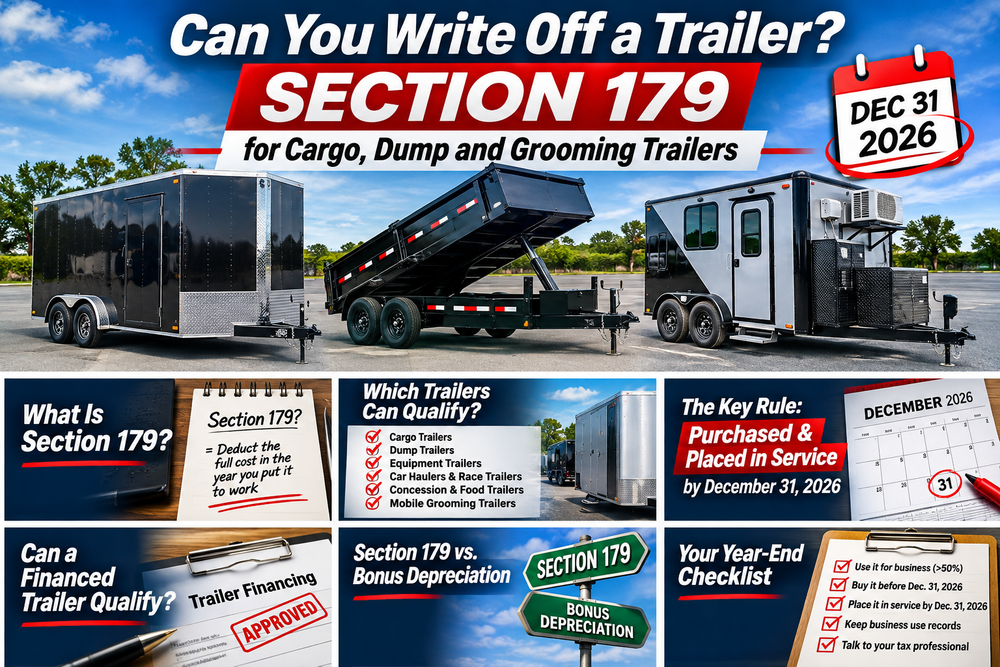
If you run a business and need a trailer, the calendar matters this time of year. A trailer you buy and start using before December 31, 2026 may be something you can write off on your 2026 taxes under Section 179 of the tax code. This guide explains Section 179 in plain English, which trailers can qualify, the one deadline rule that trips people up, and a simple checklist to work through before the year ends.
This article is general information, not tax advice. Talk to your tax professional about how Section 179 applies to your business.
What Is Section 179?
Normally, when a business buys equipment, it deducts the cost a little at a time over several years through depreciation. Section 179 lets a business choose to deduct the cost of qualifying equipment in the year it is placed in service instead. For a small business, that can mean a much bigger deduction this year rather than small pieces spread over the next five or more years.
For tax years beginning in 2026, the IRS has set the maximum Section 179 deduction at $2,560,000. That limit starts to shrink, dollar for dollar, once a business places more than $4,090,000 of Section 179 property in service during the year (source: IRS Rev. Proc. 2025-32, section 4.24, and IRS Publication 946). For most small businesses buying a trailer or two, those limits are far above what they will spend. There is also a business income limit, so the deduction generally cannot exceed your taxable income from active business activity for the year. Your tax professional can tell you how that works for you.
Who Qualifies?
Section 179 is for business property. In general, the trailer has to be used more than 50% for business in the year you place it in service to qualify (IRS Publication 946). That includes sole proprietors, LLCs, partnerships and corporations. If you use the trailer for both work and personal hauling, keep track of the business use, because the percentage matters.
A trailer used mainly for weekend fun or personal moving will not qualify. A trailer that carries your tools to job sites every day, hauls your mowers, or serves as your mobile grooming salon is a very different story.
Which Trailers Can Qualify?
Trailers are tangible equipment, so a trailer used in your business is generally the kind of property Section 179 covers. Common examples:
- Enclosed cargo trailers for contractors, plumbers, electricians, HVAC techs, cleaners and vendors.
- Dump trailers for landscaping, demolition, roofing and hauling businesses.
- Equipment trailers for skid steers, mini excavators and mowers.
- Car haulers and race trailers used by dealers, transport services, race teams run as a business, and shops.
- Concession and food trailers for food vendors and caterers.
- Mobile grooming trailers for pet groomers.
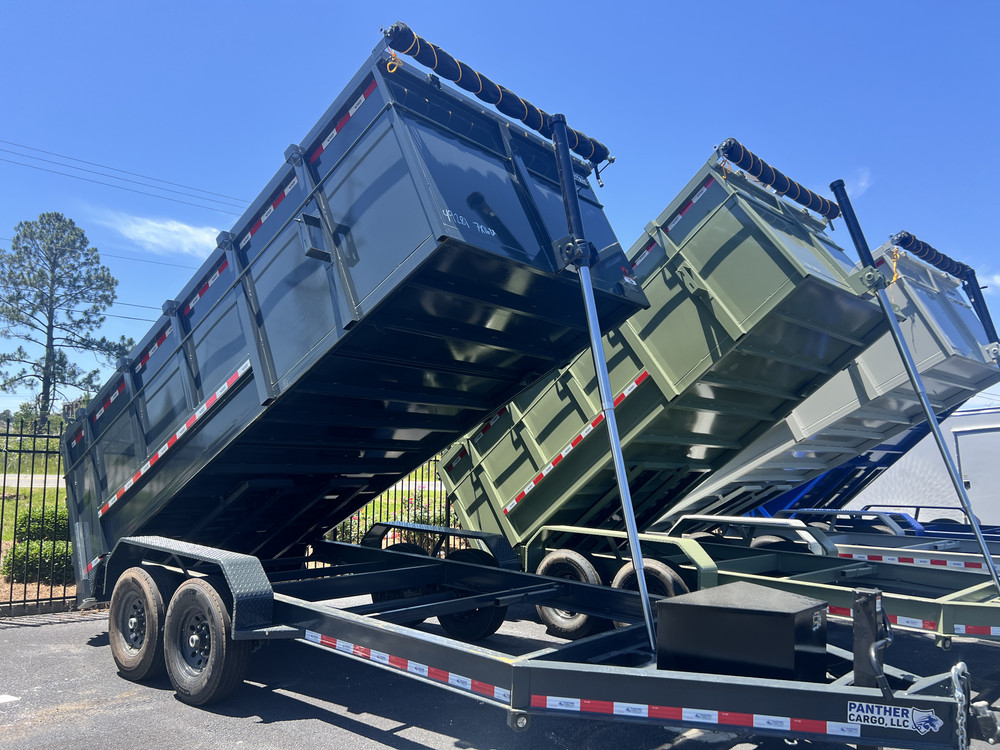
A work trailer like this Panther 7×16 dump trailer is the kind of equipment Section 179 is built for.
The Key Rule: Purchased AND Placed in Service by December 31
This is the part people miss. To count for 2026, the trailer generally has to be bought and placed in service by December 31, 2026. “Placed in service” means it is ready and available for its business use. A trailer that is ordered in December but not delivered and put to work until January will usually count for 2027 instead, not 2026.
That is why buying from in-stock inventory matters at year end. A trailer that is built and ready can be picked up or delivered and put to work right away, while a custom build may not be finished in time. If the deduction matters to you this year, plan for pickup or delivery with time to spare, not on December 30.
Can a Financed Trailer Qualify?
In many cases, yes. Section 179 is based on the cost of the property placed in service, not on how much cash you put down. A business that finances a trailer and puts it to work before the deadline may still be able to deduct the full qualifying cost for that year, even though the payments continue into the future. Lease and rent to own arrangements can be treated differently than a purchase, so ask your tax professional how your specific agreement is handled.
Want to compare your options? Read our guide on the best way to finance an enclosed trailer.
Section 179 vs Bonus Depreciation
You may also hear about bonus depreciation, which the IRS calls the special depreciation allowance. It is a separate rule that also lets a business deduct a large part of an asset’s cost in the first year. According to IRS Publication 946, recent law reinstated a 100% special depreciation allowance for certain qualified property acquired and placed in service after January 19, 2025.
The two rules work differently. Section 179 is an election you choose, with a dollar limit and a business income limit. Bonus depreciation has its own rules and applies automatically unless you elect out. Many businesses use one, the other, or both. Which one is better for you depends on your income, your entity type and your state, so this is a great question for your tax professional.
Examples by Business Type
These are simple, general examples to show how businesses often think about it. Your own situation may be different.
Contractor
A general contractor buys an enclosed cargo trailer in November, sets it up with shelves for tools, and starts taking it to job sites the next week. The trailer is used almost entirely for work, so it may qualify for 2026. See our 5 tips for purchasing a contractor trailer.
Landscaper
A lawn care company adds a dump trailer for mulch and debris and an equipment trailer for a skid steer. Both are delivered in early December and put to work on jobs before the year ends. Our buyer’s guide to dump trailers can help you pick the right size.
Mobile Groomer
A groomer who has been renting a shop space buys a mobile grooming trailer and starts booking clients from it in December. Since the trailer is the business, it is a strong candidate for Section 179. Browse grooming trailers at mobilegroomingtrailers.com.
Food Vendor
A caterer buys a concession trailer and works a holiday market before December 31. A trailer built for serving food is business equipment. Learn more in the ultimate guide to purchasing a concession trailer.
Race Team or Business Hauling
A race team operated as a business, a car transport service, or a shop that hauls customer vehicles may qualify if the trailer is used more than 50% for that business. A hobby racer hauling a personal car usually will not.
Government Agencies
Government agencies do not pay income tax, so Section 179 does not apply to them. If you buy for a city, county, school or federal agency, Renown Cargo Trailers accepts purchase orders. Call us to get a quote started.
Your Before December 31 Checklist
- Talk with your tax professional about whether Section 179, bonus depreciation, or both make sense for you this year.
- Pick an in-stock trailer so you are not waiting on a build.
- Decide how you will pay: cash, financing, or rent to own.
- Get a written bill of sale or invoice with the date, price and VIN.
- Schedule pickup or delivery well before December 31.
- Put the trailer to work and write down the date it went into service.
- Keep a simple log of business use for the year.
- Hand all of the paperwork to your tax professional when you file.
2027 Trailers in Stock Now
These units are ready now in Douglas, GA, with nationwide delivery available.
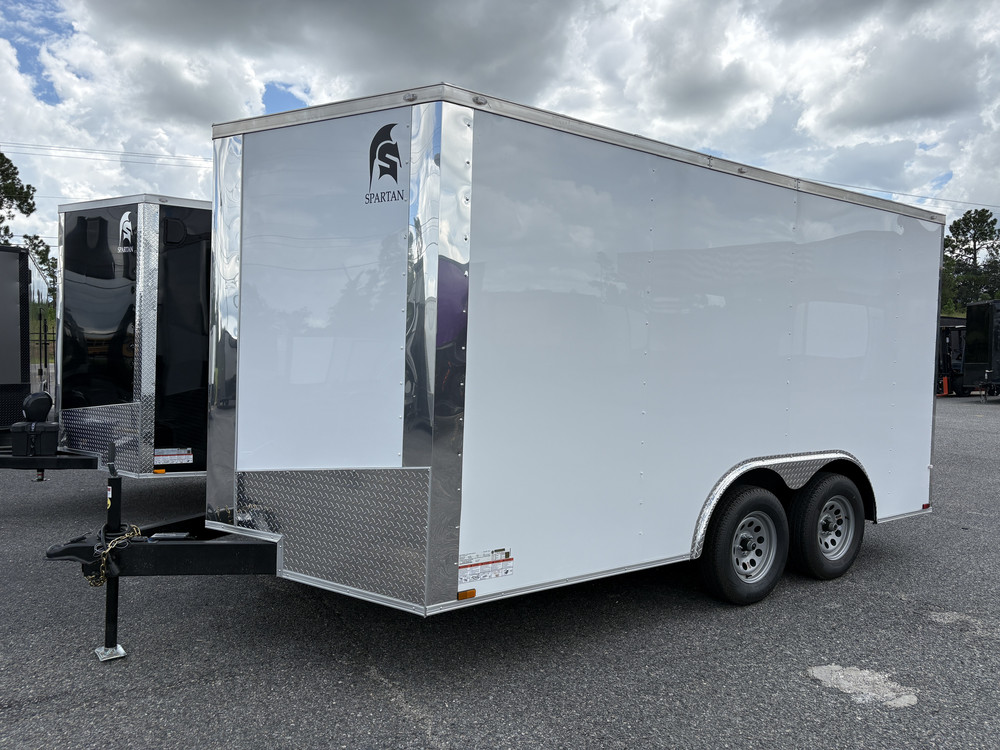
Spartan 8.5×14 TA enclosed trailer, Stock # 57725.
- Spartan 8.5×14 TA Enclosed Trailer, white, Stock # 57725: $5,999. Rent to own, no credit check.
- Southern Utility 7×20 14K Equipment Trailer, Stock # 2022: $6,299. Rent to own, no credit check.
- Panther Cargo 7x16x4 Dump Trailer, black, Stock # 2504: $11,775. Rent to own, no credit check.
- Rock Solid 8.5×18 Gull Wing Enclosed Trailer, white, Stock # 73011: $17,555. Rent to own, no credit check.
- Genesis 7×14 Pet Grooming Trailer, indigo blue, Stock # 73832: $22,750. Financing available.
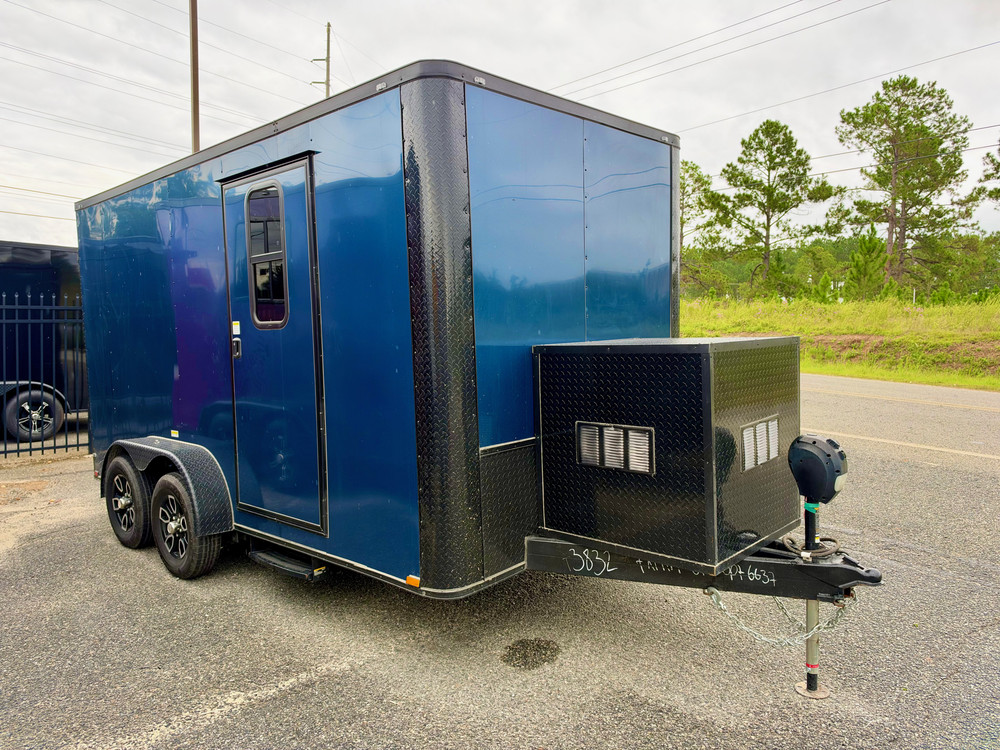
Genesis 7×14 grooming trailer, Stock # 73832.
Frequently Asked Questions
Can I write off a trailer I bought for my business?
Often, yes. A trailer used more than 50% for business is generally the type of equipment that can qualify for Section 179 or bonus depreciation. Your tax professional will confirm what applies to you.
What is the Section 179 limit for 2026?
For tax years beginning in 2026, the maximum is $2,560,000, reduced dollar for dollar once total Section 179 property placed in service tops $4,090,000 (IRS Rev. Proc. 2025-32).
If I buy in December, do I get the full deduction?
Section 179 is not prorated by the month you buy. If the trailer is bought and placed in service by December 31, 2026, the qualifying cost can generally count for 2026, subject to the limits.
Does a financed trailer count?
A financed purchase can still qualify as long as it is placed in service by the deadline. Rent to own and lease agreements may be treated differently, so ask your tax professional.
Do you deliver?
Yes. We offer nationwide delivery from our lot in Douglas, GA. Plan delivery early in December if you are counting on the 2026 tax year.
Get Your Trailer Working Before December 31
We will help you find an in-stock trailer that fits your business and get it to you in time. Reach us any way you like:
- Call 888-287-3954
- Text 912-325-3578
- Email quotes@renowncargotrailers.com
- Message us on Facebook: m.me/1536682019781890
- Visit us at 1135 Bowens Mill Rd SW, Douglas, GA 31533
- Nationwide delivery available
This article is general information, not tax advice. Talk to your tax professional about how Section 179 applies to your business.